Showing posts with label Leeyong Soo. Show all posts

Wednesday, 21 September 2011

MSFW - Obus Party

Suzi, Leeyong and I
To celebrate MSFW the Obus Store on Flinders Lane held a Mexican themed party. The shop was decked out with brightly coloured decorations and an amazing art mural. 

Guests nibbles on salsa and corn chips as they browsed the new season stock. With lots of bold prints and colour, the spring/summer collection had me wishing warmer weather was here!

If the beautiful bright coloured pieces aren't reason enough to shop at Obus, it's great to know that Obus are an entirely Melbourne based brand, with all their garments manufactured in Melbourne. This means that any money you spend at Obus stays in Melbourne supporting the local craftspeople and local economy!

I was lucky enough to attend with the busy Leeyong from Style Wilderness who covered MSFW for City Weekly. She looked fantastic in her Frida Kahlo inspired outfit.

Thanks to Obus for hosting such a wonderful party! 

Check out the pictures from the event:
With Tim, the Designer and Director of Melbourne
 based shirt company Poplin & Panache (gentleman, if you're
looking for the perfect shirt for work or the races then make sure
you checkout Poplin & Panache's online store!) and the
amazing Kyra from Pybus PR (Kyra's dedication to her clients has
seen her organise wonderful events
such as the recent L'Heure du Thé (a French High Tea)
Tim and Leeyong in front of the
amazing mural!


Amazing Elgar & Lyle designer Braham
wearing one of this own necklaces, with Leeyong and I
Stay tuned for Elgar & Lyle's Spring Summer collection to be launched soon!
Talented Obus designer Kylie Zerbst with Leeyong
looking amazing in their colourful outfits! 


Lady Melbourne and Kyra enjoying the party!
What I Wore
Dress: Kings of Carnaby Lovello dress (available in store now!)
Shoes: Christian Louboutin
Images by Suzanna Zhang

Friday, 19 August 2011

Interview - Leeyong Soo Part 2

In Part 1 Leeyong told us about, her experiences in the fashion industry. In Part 2 she tells us about some of the challenges facing designers today.

6. You started your own label Fourth Daughter which features one-off party dresses made from vintage kimono and obi material. What were the major challenges you faced starting your own label?
Making everything myself! I’m not trained in patternmaking or anything fashion related so a lot of my time went into that. As all the garments are unique, I couldn’t get them mass-produced, and was against that idea anyway as I wouldn’t have been able to afford it unless I used sweatshop labour – to which I am of course violently opposed!

7. Before starting this blog, as a consumer I was very unaware of the difficulties facing fashion designers. What thing do you think it is important for consumers to be aware of so that they can gain a greater appreciation for the work that goes into producing clothing and accessories?
All the time and materials that go into making even one item, not to mention the energy and resource! Just think about a cotton T-shirt, for example. The cotton has to be sown, grown and harvested, which takes fertiliser, water, and lots of backbreaking work – not to mention chemicals and the illnesses and poverty that accompany their use if the cotton is not being grown organically (many farmers in India suicide because they are forced into massive debt because of having to buy chemicals, or they get really sick because they don’t know how to use them properly). 

The cotton is then processed into thread, woven, cut and sewn into T-shirts, with dyeing or printing most likely taking place somewhere along the way too. That’s not even factoring in the design process – design for fit or embellishment which will differentiate it from the thousands of other T-shirts on the market. If it’s decorated somehow, where do those parts come from (beads or buttons, for example)? And then there’s also the delivery – the raw materials and the T-shirt itself probably crosses several continents before it gets to you, which of course all takes up resources. Something to think about the next time you buy a $5 T-shirt – if it’s that cheap, just consider how many people must not be getting paid properly! 

And if you’re buying something made by hand locally, just think about how much time and effort went into that too – I’ve had people say my things are too expensive but handmade items take a lot of time. If I sold them for the same price as something at Zara, I’d be paying myself $5 an hour!!! I hate to be a party pooper and I’m actually the last person you’d find paying more than $10 or so for a garment (I shop at op shops!) but we consumers have had it too cheap for too long. We’re going to have to start paying proper prices for things sooner or later!

8. You have recently been exploring the possibility of creating a fair trade range of garments. Why do you believe it is important to support fair trade and what have been the major issues you have faced trying to get a project like this off the ground?
Fair trade allows communities in developing countries to be paid a fair wage and work in fair conditions, meaning that they have adequate light and ventilation and fair work hours, among other things. The system also allows schools and other community facilities to be built, meaning that it’s not only the workers but the whole community that can benefit. My major issue is time but courage as well – I haven’t been able to look into starting a fair trade label as I’d really have to go over to a country such as India and spend a significant amount of time finding manufacturers and staff who could co-ordinate things on my behalf when I’m not there, and it’s a very big step and huge commitment.

9. You have experienced life in the fashion industry from an editorial and designer perspective. What do you believe are the major issues facing the fashion industry today?
Sustainability and ethical issues are probably the biggest ones but as I’ve gone on about them already, there is of course also the issue about new and upcoming designers – are they getting the support they need? I think so many young designers go in to uni with huge dreams, end up completing their course, and then have to work in other unrelated fields or in retail for fashion because there are only so many jobs in fashion design that actually pay.

10. What exciting projects do you have planned for the coming months?
I’ll be making more of my own clothes and accessories, as usual, and documenting them on my blog. I’m also blogging for The Clothing Exchange once a month and creating things for Peppermint. Apart from that, I’ve just started organising the fashion show for Fair@Square festival in December, and if I still have time then I’ll start looking into the fair trade label idea a bit more!

Thank you Leeyong for taking the time to share your experiences! It's great hearing from someone who's had such a varied career in the fashion industry:) 

Make sure you check out Leeyong's creative projects at her blog Style Wilderness and pick up a copy of Peppermint Magazine and check out her work!

Leeyong in a handmade Fourth Daughteroutfit with the lovely Cecylia 


Images courtesy of http://stylewilderness.blogspot.com

Friday, 12 August 2011

Interview - Leeyong Soo Part 1

I met the talented Leeyong at Cecylia's Bloggerversary Celebration. I was amazed when she told me she had made the beautiful hot pink dress dress she was wearing out of a scarf she bought from an op-shop! 

It turns out making clothes and accessories from op-shop buys was only one of Leeyong's many talents. Currently a senior writer for Peppermint magazine, Leeyong has previously worked for Vogue Nippon, designed her own label called Fourth Daughter and started a blog called Style Wilderness which focuses on sustainable fashion, documenting Leeyong's many creative projects.

I was lucky enough to interview Leeyong to learn more about her varied experiences in the fashion industry.

1. Although never formally studying fashion, you have worked for Vogue Nippon and Peppermint Magazine, started your own label Fourth Daughter and have a successful fashion blog. What influenced your decision to pursue a career in the notoriously competitive fashion industry?
I always wanted to be a fashion designer when I was younger, and would sketch designs and spend ages looking through fashion magazines – I just love fashion, although I never studied it! I never dreamed I would actually get to work at Vogue but when the opportunity presented itself to me in Tokyo, I jumped at the chance (at the time I think I said something like “I’d be delighted even to clean the toilets at Vogue”!!)

2. You worked for Vogue Nippon in the editorial department from the end of 1999 to 2007. What are some of the most memorable experiences you had during your time there?
So many… at both ends of the glamour scale. There were the times when we had to put out a shoe and handbag supplement and were up until the early hours of the morning surrounded by hundreds of bags and shoes while we worked out what would make it into the mag – and then of course all the packing up after the photo shoots for those supplements (a nightmare, as everything had to be returned in exactly the bag it came in, items had to be checked off lists, measurements had to be taken, press contact numbers confirmed, etc – all inevitably after more than 12 hours shooting in a studio). Then there were the times when we  went to huge parties and met celebrities, such as Dita von Teese (we all went out to dinner and I got to swap op-shopping stories with her – she loves a bargain too!); Isabella Blow, who I looked after on her trip to Tokyo – she had to take taxis everywhere because her hats wouldn’t fit on public transport, not that she would travel by public transport anyway; Anna Dello Russo, who singled me out in an editorial meeting full of staff wearing top brands to compliment me on my earrings (which cost something like $1 – yes, I was extremely happy about that compliment!); the Hilton sisters and Victoria Beckham… and those were just the times in Tokyo itself. I also got to travel to overseas fashion shows, which I won’t start talking about because I could go on about them forever.

3. You are currently working as a senior writer for Peppermint Magazine. How did your time in Japan influence your work at Peppermint and other fashion projects you are currently undertaking, and plan to undertake?
Despite all the celebs and events at Vogue, the highlight of my time there was organising a Fair Trade project with a company called People Tree. I got four international designers to donate patterns for garments, which were then manufactured by People Tree’s Fair Trade groups in India and Bangladesh. These garments were then sold at Isetan, a major department store in Japan, as well as People Tree stores in Tokyo and the UK and online. We also got top models to model the outfits for a 6-page story in Vogue. I think it was probably the first time major designers had collaborated with Fair Trade producers, and almost certainly the first time it had been done through a major fashion magazine. It was great to be able to spread the message about sustainable fashion to people who wouldn’t necessarily be interested normally. I’ve carried that on since coming back to Melbourne, but Peppermint magazine is a bit different in that it is aimed at girls/women who are interested in sustainability, so everything that I do for Peppermint has that focus.

As to other ways my time in Japan influences my work in fashion, well, I was working at one of the biggest fashion magazines in the world when I was there but certainly was not getting the biggest pay packet in the world, so while I wanted to look the part, I couldn’t go and buy designer fashion every day. I’d always made my own clothes, but I became more creative  and resourceful with my designs, and that has continued since returning to Melbourne.

4. You are passionate about sustainable fashion and on your blog Style Wilderness, feature a lot of secondhand garments you have re-worked. How can adopting sustainable fashion benefit consumers?
Where do I start? It depends what sort of sustainable fashion you mean, as sustainability is very broad and can mean recycled clothing or new garments made ethically from sustainable materials, for example. My take on it is as much about cost as anything – I shop at op shops most of the time and rework what I have bought there, which means some of my outfits cost under $20 (and some even less than that). Of course there is also the bonus of having a unique garment – none of that chain store stuff! Plus, if you do alter a garment, you get that unbeatable creative buzz.

5. You have worked in both the Japanese and Australian fashion industries. How do these industries differ, and what do you believe the Australian fashion industry could learn from the Japanese fashion industry?
The Japanese fashion industry is just huge because the market is so much bigger. Trends catch on a lot quicker and are a lot more visible in Japan – not just fashion, but foods and all sorts of other products too. I’m not really sure what our industry could learn from Japan’s because Australia is so different in terms of population numbers and density, and our spending is so different too. Whereas most Australians buy a car and a house during their lives, I would say most Japanese don’t. They also can’t take holidays for long stretches of time so there’s not much point saving up for that either. This is why they tend to spend so much more of their income on fashion, whereas Australians are more limited in that regard.

Stay tuned for Part 2 of this feature!

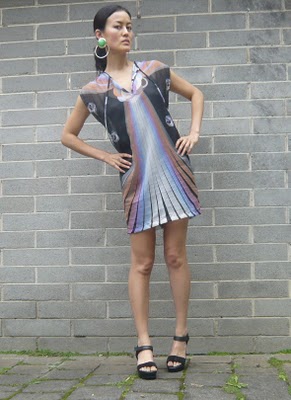
Check out some of Leeyong's beautiful creations:


Images courtesy of http://stylewilderness.blogspot.com
Related Posts Plugin for WordPress, Blogger...